7 Eye-Opening Ways to Explore Modern vs Postmodern Literature and Why It Matters

webmaster

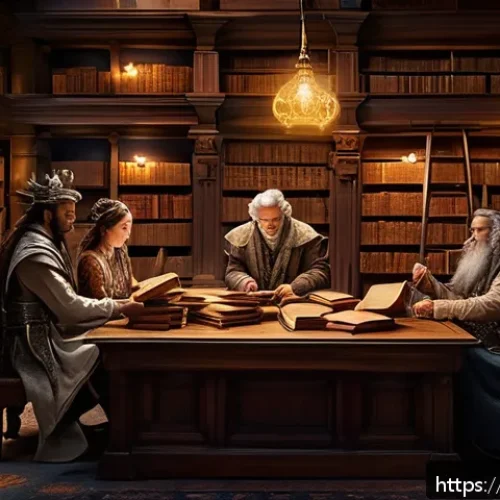
근대 문학과 탈근대 문학 - A sophisticated library scene featuring a diverse group of adult readers immersed in classic novels,...

The evolution of literature from modern to postmodern reflects a fascinating shift in how stories are told and understood. Modern literature often emphasizes structure, meaning, and a search for universal truths, while postmodern works challenge these ideas through fragmentation, irony, and questioning reality itself.

근대 문학과 탈근대 문학 관련 이미지 1

This transition mirrors broader cultural and philosophical changes in society, making it a rich topic for exploration. If you’ve ever wondered how these movements shape the books and ideas we engage with today, you’re in the right place.

Let’s dive deeper and uncover the unique characteristics that define each era. Get ready to explore the nuances in detail!

The Art of Narrative: From Order to Playfulness

Structured Storytelling and the Search for Meaning

Modern narratives often lean heavily on structure, aiming to guide readers through a coherent journey. Think of classic novels where the plot unfolds in a linear fashion, with clear beginnings, middles, and ends.

This approach reflects a deep-seated desire to find meaning and universal truths amid the chaos of life. Authors like James Joyce or Virginia Woolf, despite their experimental styles, still seek to uncover the essence of human experience through carefully crafted narratives.

The sense of order helps readers feel grounded and offers a framework to interpret complex emotions and social realities. When I first encountered such works, I appreciated how the narrative’s rhythm mirrored the human mind’s search for coherence.

Fragmentation and the Joy of Uncertainty

Postmodern storytelling flips this script by embracing fragmentation and ambiguity. Instead of a neat, logical progression, stories might jump around in time or shift perspectives without warning.

This technique mirrors the fragmented nature of reality itself, questioning whether any single truth can truly be grasped. Authors like Thomas Pynchon or Don DeLillo revel in playful irony and paradox, inviting readers to become active participants in meaning-making rather than passive consumers.

I remember feeling both challenged and exhilarated reading postmodern works, as they demanded more from me but rewarded with a richer, more layered experience.

It’s like navigating a puzzle where the pieces don’t always fit perfectly, yet the process sparks new insights.

The Role of Irony and Self-Reference

Irony becomes a central tool in postmodern literature, often used to highlight the artificiality of storytelling itself. Meta-narratives, or stories about stories, expose how narratives are constructed and how language shapes our understanding.

This self-awareness can be both humorous and unsettling, as it breaks the illusion of a seamless reality. I’ve found that this technique encourages a critical stance toward the media and messages we encounter daily, fostering skepticism but also creativity.

It’s a reminder that every story is just one lens among many, and that embracing multiple viewpoints enriches our grasp of the world.

Advertisement

Philosophical Shifts Reflected in Literary Trends

The Quest for Absolute Truth vs. Embracing Relativity

Modern literature’s preoccupation with universal truths aligns with Enlightenment ideals—reason, progress, and objectivity. Writers often grapple with moral dilemmas or societal issues, hoping to illuminate a path forward.

This quest reflects a broader cultural optimism about human potential and the power of knowledge. In contrast, postmodernism arises from a skepticism toward grand narratives, influenced by historical upheavals and the recognition of subjective realities.

It rejects the notion that one story or ideology can encompass all truths. Experiencing this shift firsthand in literature, I noticed how it mirrors our everyday struggles to make sense of a world that’s increasingly complex and multifaceted.

Language as a Construct, Not a Reflection

Postmodern thought challenges the idea that language simply represents reality. Instead, language is seen as a system that constructs meaning, often in unstable and contradictory ways.

This insight has profound implications for literature, where words become playful, slippery, and self-referential. Writers experiment with form and voice to expose language’s limitations and possibilities.

I find this liberating because it opens up new ways to express identity and experience beyond traditional boundaries. At the same time, it can make reading more demanding, as we must constantly negotiate meaning rather than receive it passively.

Implications for Cultural Critique

Both literary movements serve as mirrors to their times but also as tools for critique. Modern literature often aims to reveal social injustices and advocate for change through clear ethical stances.

Postmodernism, by contrast, complicates these efforts by highlighting power dynamics in language and representation, making us question who controls narratives and why.

This complexity can feel frustrating but also empowers readers to question dominant ideologies. I recall engaging with postmodern texts that made me rethink assumptions about history, identity, and authority, encouraging a more nuanced and skeptical worldview.

Advertisement

How Narrative Techniques Shape Reader Engagement

Emotional Connection through Coherence

One of the reasons modern literature resonates deeply is its ability to foster emotional connection through clear storytelling. The predictability of structure allows readers to anticipate and empathize with characters’ journeys.

This predictability provides comfort and a sense of shared experience, which I’ve found particularly meaningful during times of personal uncertainty. The narrative arc becomes a vehicle for catharsis, helping readers process complex feelings and societal tensions in a controlled environment.

Active Interpretation and Play in Postmodern Reading

Postmodern works demand a different kind of engagement, requiring readers to piece together meaning from disjointed fragments. This active participation turns reading into a game or puzzle, where multiple interpretations coexist without a definitive answer.

I’ve enjoyed this challenge because it transforms the reading experience into a dynamic dialogue between text and reader. It also mirrors the complexity of real life, where certainty is elusive and perspectives shift constantly.

This engagement can increase time spent with a text, enhancing its value for both enjoyment and reflection.

Challenges and Rewards of Nonlinear Narratives

Nonlinear storytelling can initially feel disorienting, but it also invites a deeper immersion in the narrative’s themes and emotions. By disrupting temporal order, authors mimic the way memory and consciousness work, creating a more intimate connection with characters’ inner lives.

I’ve noticed that once past the initial confusion, this approach often leads to richer insights and a more lasting impact. It’s like the difference between watching a straightforward movie and experiencing an experimental film that lingers in your mind long after the credits roll.

Advertisement

Visualizing Key Differences in Literary Movements

근대 문학과 탈근대 문학 관련 이미지 2

Aspect Traditional Approach Innovative Approach
Story Structure Linear, coherent plot Fragmented, nonlinear
Truth and Meaning Search for universal truths Relativity and multiple truths
Language Transparent, representational Playful, self-referential
Reader Role Passive recipient Active interpreter
Use of Irony Minimal or sincere Central and pervasive
Advertisement

Influence on Contemporary Storytelling and Media

From Literature to Film and Digital Narratives

The shift from structured to fragmented storytelling has profoundly influenced not just books but movies, television, and even video games. Contemporary filmmakers often borrow postmodern techniques like nonlinear timelines, unreliable narrators, and meta-commentary to create layered experiences.

For instance, movies such as “Pulp Fiction” or series like “Westworld” reflect this blending of complexity and playfulness. From my own viewing experience, these techniques make the stories more immersive and thought-provoking, encouraging viewers to engage beyond surface entertainment.

Impact on Genre Blending and Hybrid Forms

Postmodernism’s breakdown of boundaries has encouraged genre mixing, blurring lines between fiction and nonfiction, fantasy and reality. This has led to innovative works that defy traditional categories, appealing to diverse audiences.

I’ve noticed a surge in memoirs incorporating fictional elements or novels that include multimedia components, expanding what storytelling can be. This fluidity reflects our increasingly interconnected and media-saturated culture, where rigid distinctions no longer serve the way we consume information and entertainment.

Challenges for Writers and Audiences

While these innovations offer exciting possibilities, they also present challenges. Writers must balance complexity with accessibility, ensuring their work remains engaging without alienating readers.

Audiences, in turn, need patience and openness to new narrative forms. From my perspective, this dynamic fosters a more interactive cultural landscape, where dialogue between creators and consumers shapes evolving storytelling norms.

It’s a demanding but ultimately rewarding exchange that pushes literature and media forward.

Advertisement

The Role of Identity and Diversity in Shaping Narratives

Expanding Voices and Perspectives

Both literary phases reflect changing attitudes toward identity and representation. Modern literature often focuses on universal human experiences but sometimes at the expense of marginalized voices.

Postmodernism’s emphasis on multiplicity and skepticism toward grand narratives has opened space for diverse storytellers to challenge dominant perspectives.

I’ve found that this inclusivity enriches the literary landscape, offering fresh insights and fostering empathy across cultural divides.

Experimentation with Form to Reflect Identity

Postmodern writers frequently experiment with form to express complex identities, using fragmented narratives or shifting viewpoints to capture the fluidity of selfhood.

This resonates with contemporary conversations about gender, race, and culture, where fixed categories give way to more nuanced understandings. Personally, encountering these texts has broadened my appreciation for how form and content intertwine to convey lived experience beyond simple description.

Negotiating Tradition and Innovation

The tension between honoring literary traditions and pushing boundaries is ongoing. Writers today often draw inspiration from both modern and postmodern legacies, blending structured storytelling with playful experimentation.

This hybrid approach reflects a literary world that is dynamic and responsive to cultural shifts. From what I’ve observed, this negotiation creates works that are both accessible and intellectually stimulating, appealing to a wide range of readers while advancing the art form.

Advertisement

Closing Thoughts

Narrative art continuously evolves, reflecting our changing perspectives on meaning, identity, and reality. From structured storytelling to playful fragmentation, these approaches offer unique ways to engage with stories and the world around us. Embracing both tradition and innovation enriches our understanding and deepens our connection to literature and media.

Advertisement

Useful Information to Keep in Mind

1. Recognize that different narrative styles serve distinct purposes—linear stories often provide clarity, while fragmented ones encourage active interpretation.

2. Understanding the role of irony and self-reference can enhance your appreciation of modern and postmodern works alike.

3. Consider how cultural shifts influence storytelling, expanding voices and experimenting with form to reflect diverse identities.

4. Be open to genre blending and hybrid narratives, which reflect contemporary media’s fluid and interconnected nature.

5. Engage with stories as dynamic experiences that invite both emotional connection and critical thinking.

Advertisement

Key Takeaways

Storytelling moves between order and playfulness, balancing coherence with complexity. Modern narratives seek universal truths through structured plots, fostering emotional resonance. Postmodern narratives challenge these conventions with fragmentation, irony, and multiple perspectives, encouraging readers to become active participants. This evolution mirrors broader cultural and philosophical shifts, emphasizing diversity, critical engagement, and the fluid nature of meaning in contemporary storytelling.

Frequently Asked Questions (FAQ) 📖

Q: What are the key differences between modern and postmodern literature?

A: Modern literature tends to focus on clear structure, coherent narratives, and the pursuit of universal truths or deeper meanings. It often seeks to make sense of the world through order and logic.
Postmodern literature, on the other hand, embraces fragmentation, ambiguity, and irony. It questions the idea of absolute truth and often plays with the notion of reality itself, using techniques like unreliable narrators, metafiction, and nonlinear storytelling.
This shift reflects a move from certainty to skepticism about meaning.

Q: Why did literature shift from modernism to postmodernism?

A: The shift largely mirrors changes in society and culture, especially after the world wars, technological advances, and the rise of media saturation. People began to doubt grand narratives and fixed meanings, feeling that reality is more complex and subjective.
Postmodernism reflects this skepticism and the chaotic nature of contemporary life. Personally, when I read postmodern works, I notice how they challenge me to think critically rather than just absorb a straightforward story, which feels very much like how we experience the world today.

Q: How does understanding these literary movements enhance my reading experience?

A: Knowing the characteristics of modern and postmodern literature helps you appreciate the author’s intentions and techniques more deeply. For instance, recognizing the irony or playful structure in a postmodern novel can reveal layers of meaning that might otherwise be missed.
From my own experience, once I grasp these distinctions, I find myself more engaged and curious, which naturally keeps me reading longer and enjoying the complexity rather than feeling lost or frustrated.
This deeper engagement is great for both personal enrichment and even academic or professional discussions.

📚 References


➤ Link

– Google Search

➤ Link

– Bing Search

➤ Link

– Google Search

➤ Link

– Bing Search

➤ Link

– Google Search

➤ Link

– Bing Search

➤ Link

– Google Search

➤ Link

– Bing Search

➤ Link

– Google Search

➤ Link

– Bing Search

➤ Link

– Google Search

➤ Link

– Bing Search

➤ Link

– Google Search

➤ Link

– Bing Search
Advertisement