Literature and music connect most effectively when you match the format to your goal: close reading for learning, an original composition for creative expression, or professional support for a public release.
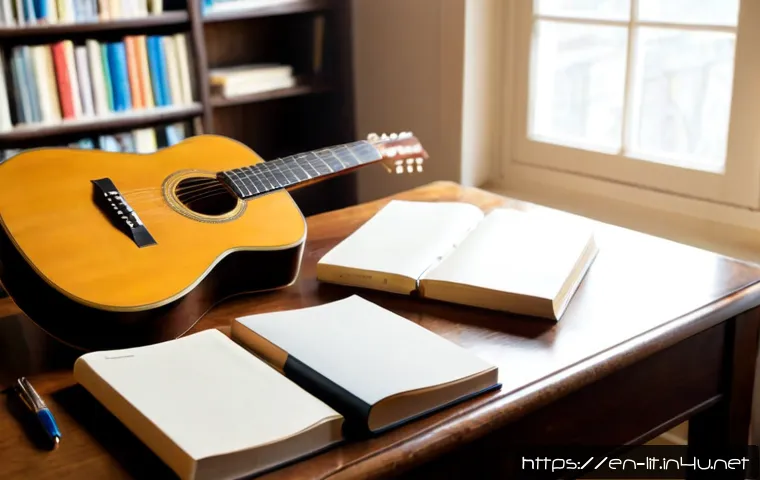
Start with the text’s rhythm and meaning, then decide whether a spoken reading, song, audiobook, podcast, or stage piece serves it best. Poetry and prose already contain pacing, repetition, sound patterns, and pauses that can guide musical choices.
Music can deepen an interpretation, but it can also narrow it if every line is treated too literally. For a simple private draft, basic recording or music notation software may be enough.
For distribution, deadlines, or uncertain permissions, compare narration, composition, and music licensing options before committing to a production plan.
At a Glance
- For learning: read the text aloud, mark its rhythm, and compare how different sounds change its mood.
- For creating: choose a format that fits the text, from a poetry reading or original song to an audiobook or staged work.
- For releasing: check rights for the text, translation, composition, arrangement, and recording separately.
| Project Path | Best For | Creative Control | Time and Technical Effort | Rights Questions to Ask |
|---|---|---|---|---|
| DIY reading or classroom analysis | Study, discussion, private practice | High | Low to moderate | Is the text appropriate to use in this setting? |
| Original song or sound piece | Creative exploration or a portfolio draft | High | Moderate; notation software or recording tools may help | Who owns the text, lyrics, composition, and any arrangement? |
| Audiobook or podcast | Spoken storytelling and serialized listening | Shared with narrator or producer | Moderate to high | Does the planned recording and online distribution need permission? |
| Stage, film, or public performance | Audience-facing adaptation | Often shared among collaborators | High; planning and coordination matter | Have text, music, arrangement, and recording rights been reviewed separately? |
Why Written Language and Sound Work So Well Together
Rhythm, voice, repetition, and emotional pacing
Writing and music both shape attention through rhythm, repetition, pacing, and sound. A poem may return to a phrase. A novel may use a repeated image. A song can answer these patterns with a recurring melody, vocal inflection, or instrumental motif. Reading a passage aloud is often the simplest way to hear where the language speeds up, settles, breaks, or holds back.
How music changes the interpretation of a text
Music does not merely sit behind words. A slow tempo can make a line feel reflective; a sharp entrance can make the same line feel urgent. Vocal delivery, instrumental arrangement, and repeated motifs can all influence how listeners understand a narrative. This is why opera, musical theatre, art song, and film scores remain useful reference points: each combines language and sound while making choices about emphasis.
Three quick ways to begin: listen, read aloud, and annotate
First, listen for repeated words, images, and sentence lengths. Next, read aloud and notice alliteration, cadence, breath, and pauses. Then annotate the text with possible shifts in volume, tempo, silence, or tone. These steps work for students studying a poem and for creators building an early adaptation draft.
Choose the Right Format for Your Goal
Poetry reading, original song, audiobook, podcast, stage piece, or classroom project
A spoken poetry reading keeps the language in front. An original song can turn selected lines or ideas into a more musical narrative. An audiobook is suited to sustained prose and clear narration. A podcast can combine reading, commentary, and sound design. A stage piece can bring together dialogue, movement, music, and performance. For a classroom project, a short reading-and-response activity may be more useful than a complex production.
Comparison table: creative control, technical effort, budget, and rights considerations
The table above offers a practical starting point. DIY tools are usually enough when the goal is study, experimentation, or a private draft. If you need polished narration, a score for performers, a stronger arrangement, or a public-facing recording, compare the scope of music notation software, audiobook production support, composition services, and music licensing assistance before asking for quotes.
When professional narration, composition, or arranging is worth considering
Professional support can add value when the project has a firm delivery date, multiple contributors, a public audience, or complex technical needs. A narrator can help establish a consistent spoken voice. A composer can create original musical material around the text. An arranger can prepare music for a particular voice, instrument, or ensemble. Ask what is included: revisions, credits, ownership, delivery format, and any rights-related responsibilities.
Build an Adaptation Without Losing the Original Meaning
Identify the central image, conflict, speaker, or narrative turn
Before choosing chords, instruments, or effects, identify what the text is doing. Is there a central image? A conflict? A distinct speaker? A moment when the narrative turns? These elements give the adaptation a structure. They also prevent a project from becoming a series of decorative sounds attached to unrelated lines.
Match tempo, instrumentation, and silence to the text’s mood
Use tempo, instrumentation, and silence as interpretive choices rather than automatic decoration. A pause may be more faithful to a difficult line than a musical fill. A recurring sound can support a repeated image. Keep the relationship clear enough that the music serves the text instead of competing with it.
Preserve ambiguity instead of forcing every line into a literal musical cue
Not every phrase needs a sound effect or an obvious emotional signal. Literature often gains power from uncertainty, contrast, and implication. Leave room for the listener to interpret the work. This is especially useful when adapting poetry, where a line may carry several meanings at once.
Rights, Credits, and Common Project Mistakes
Separate the text, translation, melody, arrangement, and recording
A literary-to-music project may involve several distinct works: the underlying text, a translation, a musical composition, an arrangement, and a sound recording. Song lyrics and musical compositions are commonly protected separately from sound recordings. Treating them as one permission can create confusion when a project moves from draft to publication.
Public domain does not automatically cover every edition or performance
A public-domain text may be adaptable, but a specific translation, edition, recording, or arrangement can still have separate rights. Do not assume that finding a work online answers every rights question. Confirm the status of the exact material you plan to quote, set to music, record, perform, or distribute.
Avoid overlong excerpts, unclear credits, and assumptions about online use
Common mistakes include using an excerpt without confirming the intended use, leaving contributor roles vague, or assuming an online upload is covered by the same permission as a private performance. Keep a simple project record: source text, edition or translation, contributors, composition details, arrangement details, recording details, and planned delivery channel.
Practical Approaches for Students, Educators, and Independent Creators

Low-cost classroom and personal-study activities
Try reading a short passage at different speeds and discussing the emotional change. Mark repeated sounds in a poem, then compare them with repeated motifs in a song. Create a listening map that notes entrances, pauses, and recurring lines. These activities focus on analysis and do not require a studio setup.
Planning a portfolio piece, reading event, or independent release
For a portfolio piece, define one clear outcome: a narrated excerpt, an original art song, or a short sound-based interpretation. For a reading event, decide whether music is background, transition material, or an equal part of the performance. For an independent release, plan credits and rights checks before recording is complete, not after.
Questions to ask a narrator, composer, arranger, studio, or licensing provider
Ask what they will deliver, who controls the finished recording, how credits will appear, and whether they handle only production or also help with permissions. Ask whether the work will be narrated, composed, arranged, mixed, or licensed for a particular use. Clear questions make it easier to compare creative collaboration services without assuming identical scopes.
Selection Criteria and Comparison Summary
Choose DIY when the goal is exploration, learning, or a private draft
Use a DIY approach when you are testing an idea, teaching literary analysis, practicing vocal delivery, or sketching a composition. Basic recording tools and music notation software can support this stage without making the project larger than it needs to be.
Consider paid tools or specialists when quality, distribution, deadlines, or permissions matter
Consider professional narration, composition, arranging, production, or music licensing support when the work will reach a public audience, involve several rights holders, or require a polished delivery. The right choice depends on the intended audience and distribution plan, not on a single “best” format.
Final checklist: audience, format, budget, rights, credits, and delivery channel
Before moving forward, check:
- Who is the audience: a class, a private group, listeners, or ticketed attendees?
- Which format best fits the text: reading, song, audiobook, podcast, or stage work?
- Can the project remain a DIY draft, or does it need a narrator, composer, arranger, or producer?
- Have the text, translation, composition, arrangement, and recording been considered separately?
- Are credits and the delivery channel clear before release?
Compare narration, composition, and licensing options based on your intended audience and distribution plan. For scope, ownership, and usage conditions, review the official details on the relevant provider’s page before making a commitment.
Closing Thoughts
The strongest literary-music projects begin with careful listening to the text. A small decision—where to pause, repeat, or remain silent—can shape meaning as much as a larger musical gesture. Start with the format that matches your purpose, then increase production complexity only when it serves the work. When a project is moving toward public use, make rights and credits part of the creative process.
Useful Things to Know
Reading aloud is analysis. It can reveal cadence, alliteration, pauses, and emphasis that are easy to miss on the page.
Silence is a creative tool. It can preserve tension or ambiguity without adding unnecessary musical cues.
Credits are practical, not decorative. Clear attribution helps document who contributed the text, music, arrangement, narration, and recording.
Important Considerations
This article does not determine whether a particular poem, novel, translation, score, lyric, recording, or arrangement is free to use. The cost, timing, required permissions, and appropriate rights holder can vary by project. Confirm the status of the exact text and audio materials you intend to use, especially before recording, public performance, or online distribution.
Frequently Asked Questions
Q1. How can I use music to analyze a poem or novel more deeply?
A1. Start by reading a passage aloud and marking repeated sounds, pauses, changes in pace, and shifts in emotion. Then compare those patterns to musical ideas such as tempo, refrain, vocal tone, and recurring motifs. The goal is not to force a single interpretation, but to notice how sound influences attention and meaning.
Q2. Do I need permission to turn a poem or book excerpt into a song or recorded reading?
A2. It depends on the exact text and intended use. A public-domain text may be adaptable, but a particular translation, edition, recording, or arrangement may have separate rights. Check the underlying text, any translation, the planned composition or arrangement, and the recording before assuming permission is not needed.
Q3. Should I hire a composer or narrator for a literary adaptation, or can I create it myself?
A3. DIY can work well for learning, private drafts, and early creative experiments. Consider a composer, narrator, arranger, producer, or licensing professional when performance quality, distribution, deadlines, technical production, or permissions are central to the project. Compare the deliverables, credits, ownership terms, and intended release channel before choosing support.